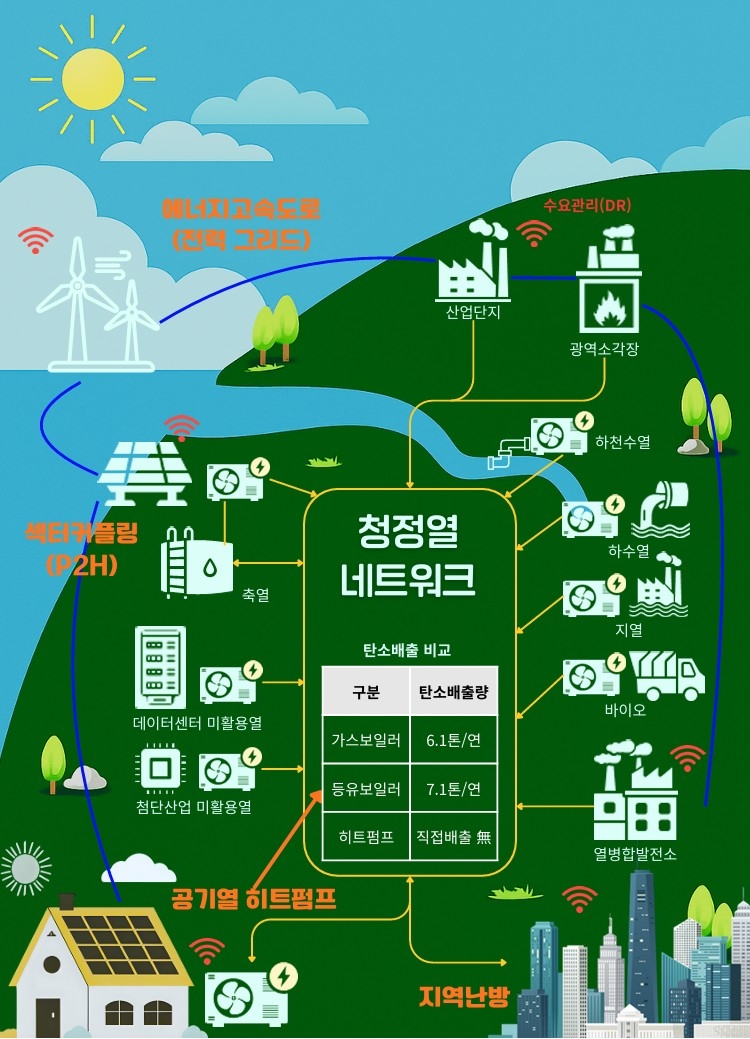
히트펌프 중심의 미래 청정열 네트워크 개념도다. 사진/기후부 제공
기후에너지환경부가 도시가스 난방의 전기화를 위해 2035년까지 히트펌프 350만대를 보급한다.
기후부는 16일 정부세종청사에서 열린 산업경쟁력강화 관계장관회의 겸 성장전략태스크포스(TF)에서 '히트펌프 보급 활성화 방안'을 발표했다.
히트펌프는 공기, 땅, 물 등 주변 열을 끌어와 냉난방에 사용하는 장치다. 연료를 태우지 않아 이산화탄소를 직접 배출하지 않는다. 기후부는 히트펌프 350만대 보급 시 온실가스 518만t을 감축할 수 있다고 전망했다.
정부는 제주, 경남, 전남 등 태양광 발전이 용이한 지역부터 도시가스 미보급 지역 내 태양광 설치 단독주택에 히트펌프 설치를 지원한다. 내년에는 마을 단위로 태양광, 공동 에너지저장장치(ESS), 히트펌프를 결합한 사업도 추진한다.
히트펌프 작동 원리 그래픽이다.사진/기후부 제공
요양보호소 등 취약계층 거주 사회복지시설 37개소에도 히트펌프 설치 예산을 지원한다. 화훼, 채소 등 시설재배농가와 새만금, 서산 등 대규모 스마트팜 단지에도 히트펌프 활용을 검토한다.
목욕탕, 숙박업, 수영장, 물놀이 시설, 기숙사 등 난방·급탕 소비량이 높은 업종에는 설치비 보조와 장기저리 융자를 지원한다. 학교, 청사, 공공시설에는 히트펌프와 태양광, ESS를 결합한 건물자립형 설비를 확대한다.
정부는 공기열을 재생에너지로 인정하고 히트펌프 법적 지원 근거를 마련한다. 온돌 바닥난방을 선호하는 국내 문화를 반영해 한국형 가정용 고효율 히트펌프(공기-물) 인증 기준도 마련한다.
신축 제로에너지건축물(ZEB) 인증 시 히트펌프 적용을 추진하고, 화석연료 난방시스템 보조사업은 단계적으로 축소해 고효율 히트펌프 보급사업으로 전환한다.
소비자가 신축 건물에서 히트펌프 또는 도시가스를 선택할 수 있도록 주택 및 도시가스 관련 법령도 개선한다.
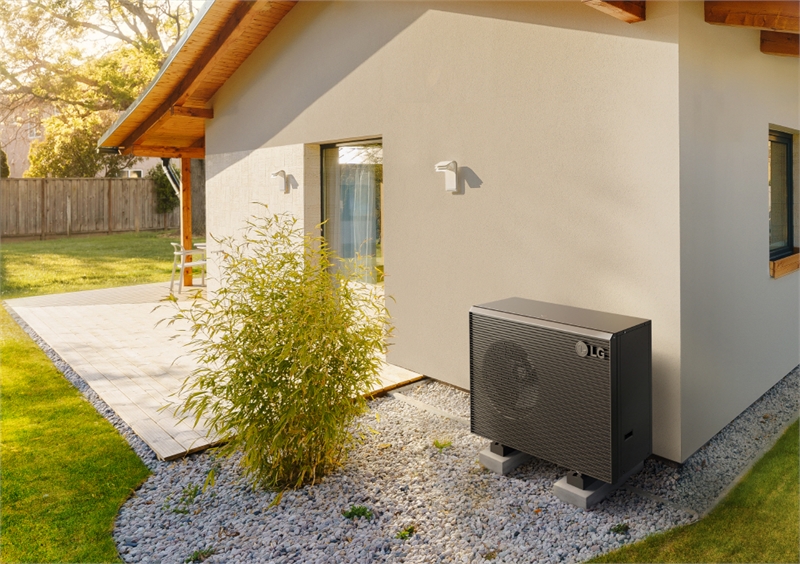
지구온난화지수(GWP)가 3에 불과한 자연냉매(R290)을 적용한 LG전자의 HVAC 설루션 히트펌프 써마브이 R290 모노블럭. 사진/LG그룹 제공
전기요금 부담 완화를 위해 기후부는 주택용 전기요금 누진제를 적용하지 않는 가정용 히트펌프 전기요금 체계를 마련한다. 해당 체계는 연초 발표될 예정이다.
권병철 기후부 열산업혁신과장은 "태양광 발전이 6㎾만 되면 히트펌프를 설치하더라도 누진제 구간에 들어가지 않아 소비자가 적정한 요금으로 사용할 수 있다"고 밝혔다.
최종룡 기자
영문 기사
아래는 위 기사를 '구글 번역'으로 번역한 영문 기사의 전문입니다. 영문 번역에 오류가 있을 수 있음을 전제로 합니다.
Title 1: Ministry of Climate to Deploy 3.5 Million Heat Pumps by 2035
Title 2: Government Pushes Electrification of City Gas Heating with 3.5 Million Heat Pump Plan
Title 3: Heat Pump Deployment Targets 5.18 Million Tons of Greenhouse Gas Reduction
Subtitle: Progressive electricity rate exemption for residential use; deployment starts with solar-equipped single-family homes
The Ministry of Climate, Energy and Environment will deploy 3.5 million heat pumps by 2035 to electrify city gas heating.
The Ministry announced the "Heat Pump Distribution Activation Plan" at the Industrial Competitiveness Enhancement Ministerial Meeting and Growth Strategy Task Force held at Government Sejong Complex on December 16.
A heat pump is a device that draws heat from surrounding air, ground, or water for heating and cooling. It does not directly emit carbon dioxide because it does not burn fuel. The Ministry projects that deploying 3.5 million heat pumps will reduce greenhouse gas emissions by 5.18 million tons.
The government will support heat pump installation in solar-equipped single-family homes in areas without city gas supply, starting from regions where solar power generation is favorable, such as Jeju, South Gyeongsang, and South Jeolla provinces. Next year, the government will also promote village-level projects combining solar panels, shared energy storage systems (ESS), and heat pumps.
The government will provide budget support for heat pump installation at 37 social welfare facilities housing vulnerable populations, including nursing care facilities. It will also consider heat pump utilization for greenhouse farms growing flowers and vegetables, and large-scale smart farm complexes in Saemangeum and Seosan.
Industries with high heating and hot water consumption, such as public baths, lodging, swimming pools, water parks, and dormitories, will receive installation subsidies and long-term low-interest loans. Schools, government buildings, and public facilities will expand building-independent heat pump systems combined with solar panels and ESS.
The government will recognize air heat as renewable energy and establish legal support for heat pumps. Reflecting the domestic preference for ondol floor heating, certification standards for Korean-style high-efficiency residential heat pumps (air-to-water) will be established.
Heat pump application will be promoted for new zero-energy building (ZEB) certification. Subsidy programs for fossil fuel heating systems will be gradually reduced and converted to high-efficiency heat pump distribution programs.
Laws related to housing and city gas will be revised so consumers can choose between heat pumps or city gas for new buildings.
To ease electricity bill burdens, the Ministry will establish a residential heat pump electricity rate system that does not apply the progressive rate structure. This system is expected to be announced early next year.
Kwon Byeong-cheol, Director of the Heat Industry Innovation Division at the Ministry, said, "With just 6kW of solar power generation, consumers can use heat pumps without entering the progressive rate bracket, allowing them to use electricity at reasonable rates."
Reporter Choi joung ryong